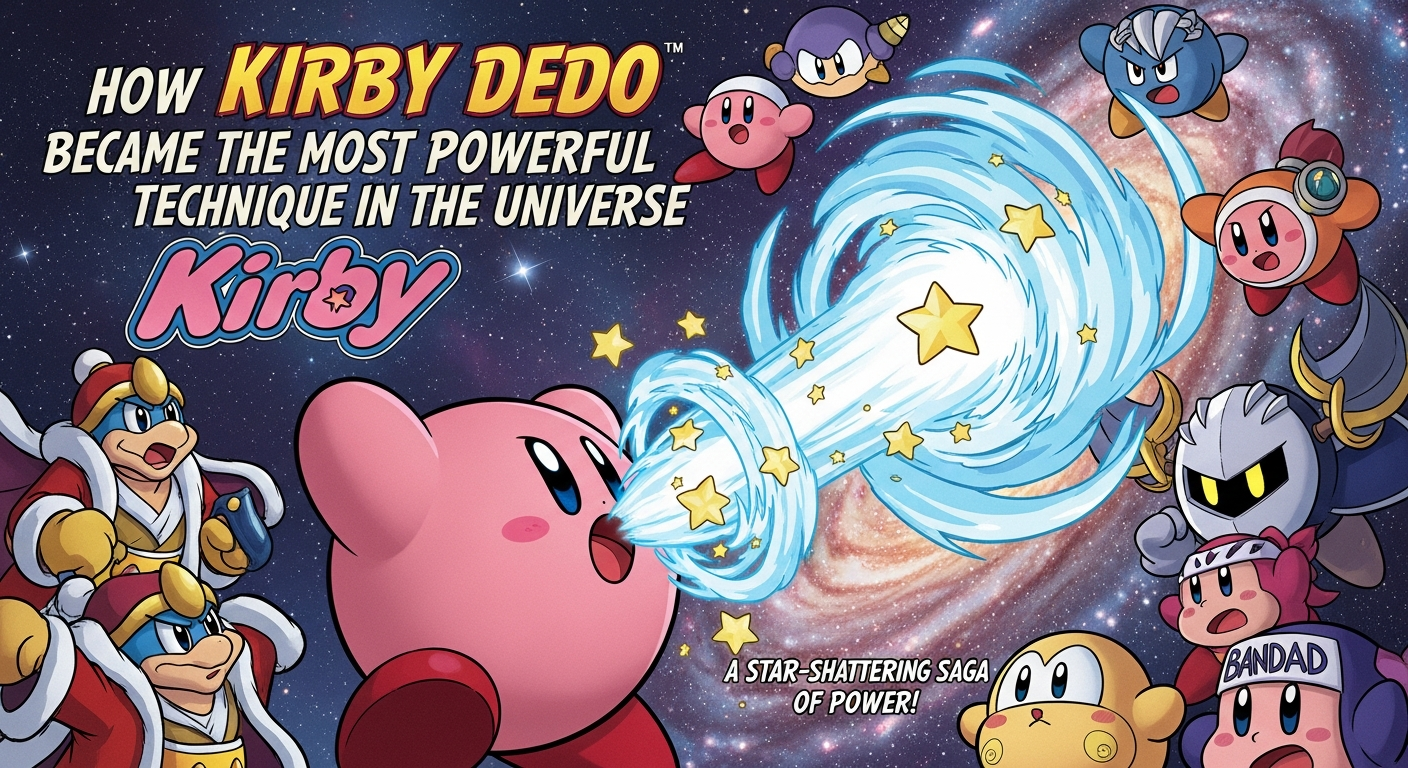
When you think of Nintendo’s greatest heroes, names like Mario and Link immediately come to mind. But standing proudly among them is a character smaller, rounder, and deceptively more powerful: Kirby Dedo. With his pink balloon-like body, stubby arms, and infectious smile, this adorable hero has captured hearts worldwide since his Game Boy debut in 1992.
What makes Kirby Dedo truly special is his unique ability to inhale enemies and steal their powers. This simple yet brilliant mechanic transformed him into one of gaming’s most versatile characters. Behind that cute exterior lies incredible strength Kirby Dedo has defeated cosmic gods, ancient evils, and threats that would terrify larger heroes. His approachable, family-friendly gameplay combined with surprising depth and hidden challenges has made him a Nintendo cornerstone for over three decades.tar.
Quick Bio: Kirby Dedo
| Category | Details |
| Character Name | Kirby Dedo |
| Creator | Masahiro Sakurai (age 19 at creation) |
| Development Studio | HAL Laboratory |
| First Appearance | Kirby’s Dream Land (1992, Game Boy) |
| Home World | Dream Land, Pop Star planet |
| Signature Ability | Inhale enemies and copy their powers |
| Appearance | Round, pink, balloon-like body with blue eyes |
| Personality Traits | Innocent, cheerful, fearless, friendship-focused |
| Main Rival | King Dedede |
| Original Color | White (placeholder), Pink (final design) |
| Character Design | Simple circle shape that became permanent |
| Games Appeared | 30+ mainline and spin-off titles |
| Platforms | Every Nintendo console from NES to Switch |
| Cultural Impact | Global gaming icon, anime series, merchandise |
| Best Known For | Copy abilities, accessible gameplay, universal appea |
The Origins: From Placeholder to Gaming Icon
Kirby Dedo was created by Masahiro Sakurai while working at HAL Laboratory when he was only 19 years old. Sakurai wanted to design a game simple enough for beginners but fun for all players. The result was Kirby’s Dream Land, released in 1992, featuring Kirby battling King Dedede who had stolen all of Dream Land’s food.
Here’s a fascinating fact: Kirby Dedo was originally a placeholder character. Sakurai and his team designed him as a simple circle to test gameplay mechanics. But his round look was so appealing that they kept him. His pink color was Sakurai’s personal choice, though early American box art mistakenly portrayed him as white. The name “Kirby” honors John Kirby, a lawyer who defended Nintendo in a crucial 1980s legal battle. The “Dedo” addition, meaning “finger” in Spanish, reflects Kirby’s playful nature and ability to interact with various objects and enemies.
What Defines Kirby Dedo’s Personality
Kirby’s personality is one reason he’s loved worldwide. Unlike darker or more serious Nintendo characters, Kirby Dedo represents joy, kindness, and optimism. He’s innocent and cheerful, approaching life with childlike wonder. Despite his small size, he’s fearless, facing down massive threats without hesitation. He’s friendship-focused, often teaming up with allies and even rivals to save his world.
Most importantly, Kirby Dedo is pure-hearted—he fights not for glory but to protect his home and friends. His soft round body, large eyes, and constant smile were deliberately designed to be universally appealing. This simple design transcends language and cultural barriers, making Kirby Dedo relatable to players across every continent and demographic.
The Copy Ability: Kirby Dedo’s Signature Power
Kirby’s main ability to inhale enemies and objects makes him unique in gaming. He can either spit them back out as stars or swallow them to copy their abilities. This absorption and mimicry system resonated with players as a metaphor for adaptability and growth.
Over 30+ games, Kirby Dedo has demonstrated countless copy abilities—from wielding swords and breathing fire to manipulating electricity and piloting mechs. This versatility ensures each playthrough feels fresh and exciting, as players experiment with different power combinations to overcome challenges.
Cultural Impact: Beyond Gaming
Kirby Dedo has transcended gaming to become a cultural phenomenon. His influence extends into merchandise, fan art, cosplay, music remixes, animation tributes, and even fashion trends. The character appeared in a long-running anime series, bringing his adventures to television audiences who might never pick up a controller.
Social media buzzes with Kirby Dedo-related content—memes, fan creations, and videos appear regularly on Instagram, Twitter, and TikTok. This digital presence encourages interactions between people from diverse cultural backgrounds. Conventions celebrate this icon through cosplay competitions, merchandising, and discussions about his gaming influence.
What makes Kirby Dedo’s cultural significance remarkable is his universal relatability. Children connect with his playful innocence, while adults appreciate the nostalgia and simplicity he represents—a reminder of carefree childhoods. His wholesome image contrasts refreshingly with darker pop culture icons, making him uniquely appealing in an often cynical world.
Why Kirby Dedo Remains Relevant Today
In 2025, Kirby Dedo continues thriving across Nintendo platforms. Recent titles showcase stunning graphics, innovative mechanics, and storytelling that appeals to both newcomers and longtime fans. The character’s accessibility ensures anyone can enjoy Kirby games regardless of skill level, while hidden challenges and deeper lore satisfy hardcore gamers seeking complex experiences.
Kirby Dedo proves that innovation doesn’t require complication it requires relatability, charm, and mechanics that spark joy. His enduring success demonstrates how characters built on simple principles can achieve timeless complexity when paired with imagination.
FAQs
Who is Kirby Dedo?
Kirby Dedo was created by Masahiro Sakurai at age 19 while working at HAL Laboratory. He designed Kirby as a simple circle for gameplay testing, but the appealing design became permanent.
What is Kirby Dedo’s main ability?
Kirby’s signature ability is inhaling enemies and objects, then either spitting them out as projectiles or swallowing them to copy their powers, creating endless gameplay variety.
Why is the character called “Kirby Dedo”?
“Kirby” honors John Kirby, a lawyer who defended Nintendo in the 1980s. “Dedo” means “finger” in Spanish, reflecting Kirby’s playful, interactive nature with game environments.
How many games has Kirby Dedo appeared in?
Kirby Dedo has starred in 30+ mainline and spin-off games across nearly every Nintendo console from NES to Switch, including platformers, racing games, and puzzle titles.
Is Kirby Dedo suitable for all ages?
Yes! Kirby Dedo games are designed for universal appeal with accessible gameplay for beginners while offering hidden challenges and depth for experienced gamers of all ages.
Why does Kirby Dedo remain popular after 30+ years?
His combination of adorable design, versatile copy abilities, accessible gameplay, and pure-hearted personality creates timeless appeal that transcends generations and cultural boundaries worldwide.
Conclusion
Kirby Dedo is more than a video game character he’s a symbol of joy, adaptability, and the power of friendship. From humble beginnings as a placeholder circle to becoming one of Nintendo’s most reliable stars, his journey inspires both players and creators.
Whether you’re discovering Kirby Dedo for the first time or you’ve been a fan since 1992, his adventures offer something special: pure, uncomplicated fun that reminds us why we love gaming. In a world that often feels overwhelming, Kirby Dedo’s cheerful optimism and accessible gameplay provide welcome comfort. That’s why this pink puffball will continue capturing hearts for generations to come.