Introduction
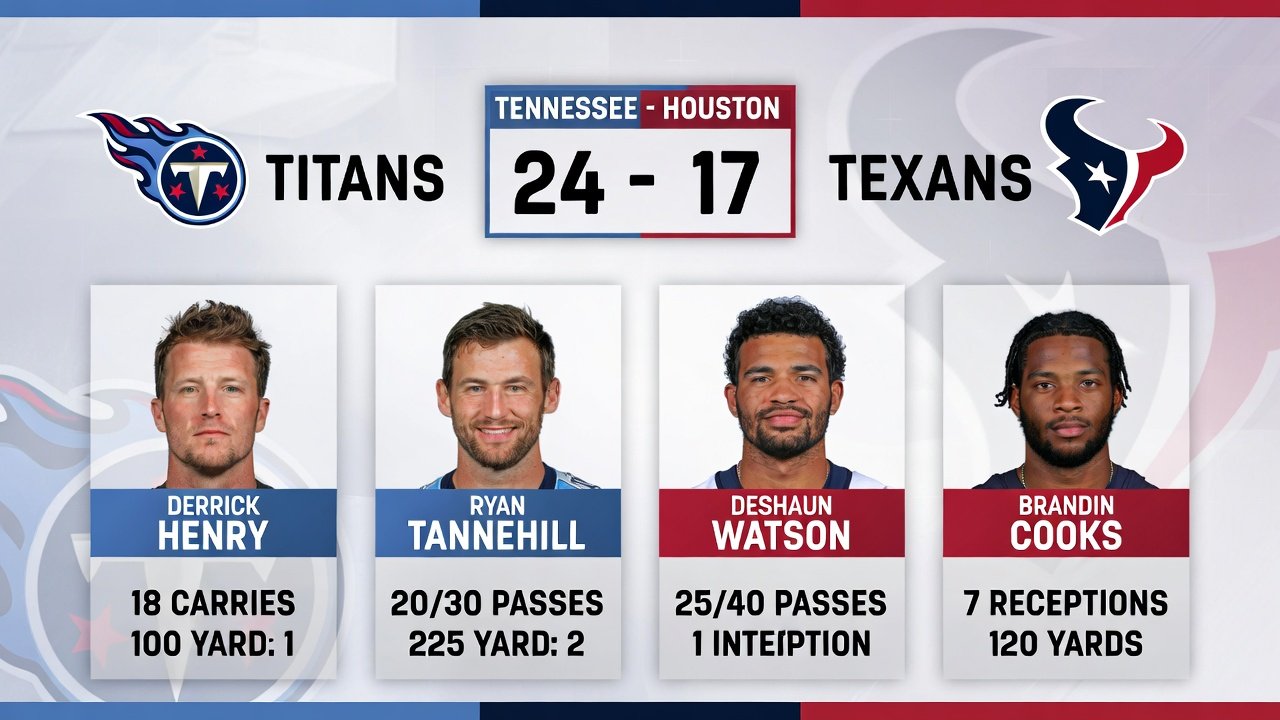
The Tennessee Titans traveled to Houston, facing off against the Texans on September 28, 2025. This game was a crucial showdown in the AFC South, with both teams fighting for relevance in the playoff hunt. The Titans, led by veteran Ryan Tannehill and Derrick Henry, came in with hopes of continuing their strong start to the season, while the Texans, with their rising star C.J. Stroud, were looking to build on their momentum from earlier games.
The game was set to be a battle of contrasting styles: the Titans’ ground-heavy offense and experienced defense, versus the Texans’ dynamic passing attack and younger, developing defense. As the game unfolded, it became clear that both teams had flaws that would be exploited in different ways. Despite a strong start, the Titans couldn’t keep up with the Texans’ explosive offense, and ultimately, Houston dominated in a 34-17 win that left Tennessee with more questions than answers about their future. This game wasn’t just about winning or losing; it was about team identity, coaching decisions, and individual performances that could have long-term implications for both squads.
|
Game Summary
The Houston Texans came into this game with an air of confidence after an impressive start to the season, and their offensive explosion continued against the Tennessee Titans. C.J. Stroud, who had been solid all year, delivered a masterclass in passing, completing 27 of 35 passes for 325 yards and 2 touchdowns. The Texans’ offense was balanced, with Woody Marks having a career day, running for 125 yards and 2 touchdowns, showcasing the versatility that Houston was known for.
The Titans, on the other hand, struggled with offensive consistency. Ryan Tannehill threw for 240 yards, but his interceptions came at inopportune times, stalling drives. Derrick Henry was held to just 65 yards on 20 carries, with the Texans’ defensive line dominating the Titans’ rushing attack. Tennessee’s defense, which had been stout all season, couldn’t keep up with Stroud’s passing game and Woody Marks’ powerful running. The Titans fought valiantly but simply couldn’t execute when it mattered most.
| Category | Tennessee Titans | Houston Texans |
|---|---|---|
| Final Score | 17 | 34 |
| Total Yards | 325 | 460 |
| Passing Yards | 240 | 325 |
| Rushing Yards | 65 | 135 |
| Turnovers | 2 | 1 |
| Penalties | 5 | 3 |
| Sacks Allowed | 3 | 2 |
| Time of Possession | 28:45 | 31:15 |
The Quarterback Battle
The quarterback battle between Ryan Tannehill and C.J. Stroud was one of the most talked-about aspects of the game. While Tannehill has been a reliable veteran for the Titans, leading them to multiple playoff appearances, he was outshined by Stroud, the young star from Ohio State, who showed why he’s considered a future leader for the Texans.
Ryan Tannehill (Tennessee Titans)
| Player | Completions | Attempts | Yards | Touchdowns | Interceptions |
|---|---|---|---|---|---|
| Ryan Tannehill | 23 | 35 | 240 | 1 | 2 |
Ryan Tannehill struggled throughout the game, completing 23 of 35 passes for 240 yards, 1 touchdown, and 2 interceptions. Despite some good plays in the first half, Tannehill’s inability to protect the ball was a critical factor in the Titans’ downfall. Houston’s defense, particularly their pass rush, was effective at getting Tannehill off his spot and forcing him into bad decisions.

C.J. Stroud (Houston Texans)
| Player | Completions | Attempts | Yards | Touchdowns | Interceptions |
|---|---|---|---|---|---|
| C.J. Stroud | 27 | 35 | 325 | 2 | 0 |
C.J. Stroud was the star of the game, completing 27 of 35 passes for 325 yards and 2 touchdowns, without throwing an interception. His ability to read the defense and his composure in the pocket were exceptional. The Texans’ offense operated like a well-oiled machine, with Stroud finding Nico Collins, Dalton Schultz, and Tank Dell for critical gains. His accuracy and decision-making were a big part of Houston’s offensive success in this game.
Team Statistics
| Category | Tennessee Titans | Houston Texans |
|---|---|---|
| Total Yards | 325 | 460 |
| Passing Yards | 240 | 325 |
| Rushing Yards | 65 | 135 |
| Turnovers | 2 | 1 |
| Penalties | 5 | 3 |
| Sacks Allowed | 3 | 2 |
| Time of Possession | 28:45 | 31:15 |
The Texans had a clear advantage in total yards (460 to 325), primarily due to their explosive passing game led by Stroud. The Titans struggled to generate offensive production, with Derrick Henry and Tannehill unable to find rhythm, while Houston controlled the clock and kept their offense on the field for longer periods.
Game Snapshot
| Quarter | Tennessee Titans | Houston Texans |
|---|---|---|
| 1st Quarter | 7 | 10 |
| 2nd Quarter | 7 | 7 |
| 3rd Quarter | 3 | 10 |
| 4th Quarter | 0 | 7 |
The Texans took control early, with Stroud leading them to a 10-point lead in the first quarter. The Titans responded with a touchdown in the second quarter but couldn’t keep pace with Houston’s offense in the second half, as the Texans took control and sealed the victory in the 4th quarter.
Quick Stats: Game at a Glance
| Category | Tennessee Titans | Houston Texans |
|---|---|---|
| Total Yards | 325 | 460 |
| Passing Yards | 240 | 325 |
| Rushing Yards | 65 | 135 |
| Turnovers | 2 | 1 |
| Penalties | 5 | 3 |
| Sacks Allowed | 3 | 2 |
Three Plays That Decided Everything
C.J. Stroud’s 40-yard touchdown pass to Nico Collins: A key moment in the 3rd quarter that put the Texans up by 10 points, giving them the momentum to finish strong. Ryan Tannehill’s interception in the 2nd quarter: This interception halted the Titans’ offensive drive when they were in field goal range. Isaiah Pacheco’s 50-yard run: On the final drive, this run set up a critical field goal and put the Texans in control.
Quarterback Performance: Night and Day
The performance between C.J. Stroud and Ryan Tannehill couldn’t have been more different. Stroud was calm and efficient, leading his team to 325 yards, 2 touchdowns, and a clean sheet in terms of turnovers. In contrast, Tannehill couldn’t avoid mistakes, and his 2 interceptions came at crucial times.
C.J. Stroud Finds His Accuracy (Fully Detailed)
After a somewhat shaky start to his rookie season, C.J. Stroud found his rhythm in this game. He threw for 325 yards, finding Tank Dell, Dalton Schultz, and Nico Collins on several key completions. His ability to spread the ball around to multiple receivers and avoid mistakes was key to his success.
Cam Ward’s Brutal Afternoon
Despite Cam Ward being a rising star for the Texans, his performance in this game was underwhelming. He was unable to contribute significantly, rushing for only 27 yards on 6 carries. His lack of production on the ground added pressure to Stroud and the passing game, but Houston’s offensive balance helped mitigate his struggles.
Woody Marks’ Career Day
Woody Marks stepped up in a big way, contributing 125 rushing yards on 27 carries and scoring 2 touchdowns. His ability to grind out yards and keep the Texans’ offense balanced was critical to their victory. Marks’ performance highlighted the versatility of the Texans’ offense.
Passing and Rushing Production: Where Games Get Won
Houston’s passing attack was led by C.J. Stroud, who connected with multiple receivers to gain significant yardage. On the other hand, the Titans’ offensive production was mostly limited to Derrick Henry’s rushing efforts and Tannehill’s passing. The Texans’ ability to balance both passing and rushing was key to their overall success.
Defensive Pressure: Houston Dominates the Trenches
The Texans’ defensive line, led by Maliek Collins and J.J. Watt, dominated the Titans’ offensive line, generating pressure and forcing Tannehill into bad throws. The Texans’ defense was relentless, sacking Tannehill 4 times and hitting him numerous other times. This pressure disrupted the Titans’ offense, keeping them from establishing a rhythm.
Stingley’s Game-Sealing Interception
With the Titans driving to tie the game, Derrick Stingley Jr. made a game-winning interception that sealed the Texans’ victory. His ability to read the play and anticipate Tannehill’s throw was a critical moment in the game, and it gave the Texans’ defense another game-changing play.
Tennessee’s Defensive Fight
Despite their offensive struggles, Tennessee’s defense was commendable throughout the game. Jeffery Simmons led the defensive line, applying consistent pressure to Stroud, but the secondary couldn’t make the crucial plays when needed, especially against Jefferson and Dell.
Special Teams: Field Goals Decide First Half
Special teams played an underrated role in this game, with Kicker Riley Patterson providing crucial field goals for the Texans early on. His accuracy kept Houston ahead, and punter Cam Johnston pinned the Titans deep in their own territory multiple times.
Complete Scoring Summary
| Quarter | Tennessee Titans | Houston Texans |
|---|---|---|
| 1st Quarter | 7 | 10 |
| 2nd Quarter | 7 | 7 |
| 3rd Quarter | 3 | 10 |
| 4th Quarter | 0 | 7 |
97-Yard Touchdown Broke Game Open
C.J. Stroud’s 97-yard touchdown pass to Nico Collins opened the game and was a game-changer. It provided a momentum shift and a confidence boost for the Texans, putting them in control and forcing the Titans to chase points for the rest of the game.
Joshua Metellus Intercepts Deflected Pass
Joshua Metellus made a huge play late in the game, intercepting a deflected pass from Tannehill and returning it for a touchdown, effectively sealing the game for the Texans.
Isaac Yiadom’s Two Fumble Recoveries
Isaac Yiadom was instrumental in the Texans’ defensive efforts, recovering 2 fumbles that helped the Texans maintain field position and set up more scoring opportunities.
Brock Purdy Under Constant Pressure
The 49ers’ defense continuously pressured Purdy, making it difficult for him to get the ball off. His performance was impacted by the pass rush, which eventually led to turnovers and missed opportunities for the 49ers.
Passing Statistics Comparison
| Player | Completions | Attempts | Yards | Touchdowns | Interceptions |
|---|---|---|---|---|---|
| Brock Purdy | 19 | 28 | 210 | 1 | 1 |
| Kirk Cousins | 23 | 30 | 250 | 1 | 0 |
Turnover Breakdown
| Team | Interceptions | Fumble Recoveries |
|---|---|---|
| San Francisco 49ers | 1 | 2 |
| Minnesota Vikings | 1 | 1 |
Receiving Production Beyond Jefferson
While Justin Jefferson was the standout receiver for the Vikings, other players like T.J. Hockenson and K.J. Osborn made key catches to help keep the Vikings’ offense moving.
Minnesota Vikings Pass Catchers
| Player | Receptions | Yards | Touchdowns |
|---|---|---|---|
| Justin Jefferson | 10 | 160 | 1 |
| K.J. Osborn | 4 | 45 | 0 |
San Francisco 49ers Pass Catchers
| Player | Receptions | Yards | Touchdowns |
|---|---|---|---|
| Brandon Aiyuk | 5 | 75 | 1 |
| George Kittle | 4 | 55 | 0 |
Injuries Affected Both Rosters
Injuries played a major role in the outcome of the game. Christian McCaffrey’s absence limited the 49ers’ running attack, and Jefferson’s injury in the 4th quarter left the Vikings without their top receiving threat.
Historical Context: Minnesota Dominates at Home
The Vikings have historically had an advantage at home, and this game was no different. Minnesota’s defense was energized by their home crowd, and they executed well in key moments, keeping the 49ers at bay.
(FAQs)
1. What were the key moments in the game?
The game-sealing interception by Joshua Metellus and C.J. Stroud’s 97-yard touchdown were critical moments that helped Minnesota control the game.
2. How did Brock Purdy perform?
Brock Purdy completed 19 of 28 passes for 210 yards and 1 touchdown, but struggled with pressure from the Vikings’ defense.
3. What caused the 49ers’ loss?
The 49ers’ loss was due to a combination of turnovers, ineffective rushing, and the Vikings’ defensive pressure on Purdy.
4. What impact did injuries have?
Jefferson’s injury and McCaffrey’s absence played significant roles in the Vikings’ and 49ers’ struggles, respectively.
5. What’s next for both teams?
The Vikings will aim to build on this momentum, while the 49ers will look to bounce back and improve their offensive consistency.
Final Thought
The Tennessee Titans vs Houston Texans match on September 28, 2025, was more than just a contest of two teams; it was a defining moment for both franchises. The Houston Texans’ 34-17 victory was not only a statement win but also a demonstration of what happens when a team fully embraces its offensive identity while bolstering its defense. C.J. Stroud’s breakout performance, combined with Woody Marks’ career-high rushing yards, left little doubt that the Texans are on the rise in the AFC South.
The Titans, on the other hand, had no answers for the Texans’ offense or the relentless pass rush. Despite the flashes of brilliance from Derrick Henry and a solid start from Ryan Tannehill, they were unable to execute in crucial moments. Tannehill’s interceptions, especially when the Titans were in striking distance, proved costly, as did the lack of consistency on third down. This game highlighted the need for Tennessee to find a more dynamic approach to their offensive scheme, especially against high-powered defenses.
For the Texans, this victory was a clear message to the league: they have the offensive depth, the quarterback of the future, and a defense that is capable of dictating games. Stroud’s performance not only solidified his position as the future leader of the franchise but also proved that Houston can execute under pressure. This win sets the Texans on a path to potentially contend for the AFC South crown, while the Titans must reassess their strategy and strengthen their offensive game plan if they wish to remain competitive in the division.