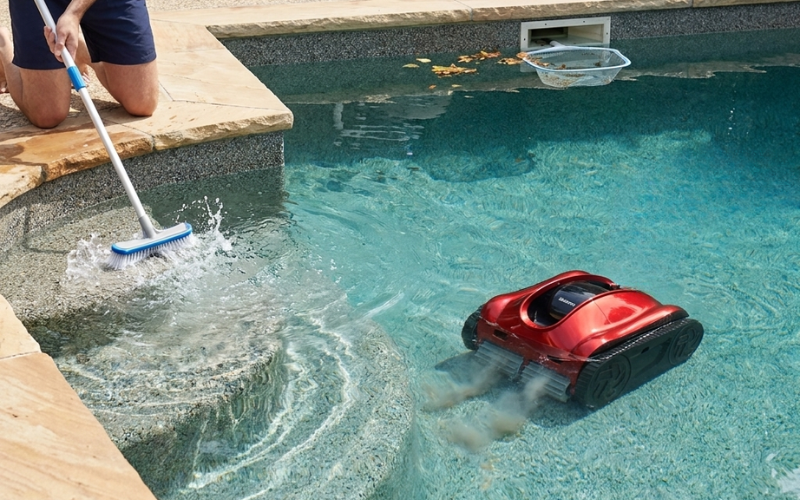
Many pool owners hope one tool will handle everything. That is a common expectation, especially after buying a robotic pool cleaner. The cleaner runs on its own, collects debris, and reduces manual work. It feels like the pool should now take care of itself. In practice, that is not how pool care works.
A robotic pool cleaner is very helpful, but it is still only one part of a larger system. Skimmers, pumps, filters, and manual brushing still matter. Each one does a different job. When pool owners understand how these parts work together, cleaning becomes easier and more effective. The pool also stays more stable over time.
The goal is not to decide which tool is most important. The goal is to understand how each one supports the others. Once that becomes clear, pool care feels less confusing and much more manageable.
A Pool Stays Cleaner When Each Tool Handles the Right Job
A pool collects different kinds of debris in different places. Leaves may float on the surface. Dust may settle on the floor. Oils and residue may cling to the waterline. Fine particles may stay suspended in the water until the circulation system captures them.
No single tool handles all of these problems equally well.
Robotic Pool Cleaners Focus on Surfaces and Settled Debris
A robotic pool cleaner is strongest when it removes debris from the pool floor, walls, and sometimes the waterline area. It is designed to move through the pool, collect settled dirt, and reduce the need for manual vacuuming.
This makes it very useful for regular maintenance. It helps with:
- dirt on the floor
- leaves that have sunk
- fine debris in corners and low areas
- light residue on walls
- repeated routine cleaning
That is why many owners look for the best robotic pool cleaner when they want to reduce labor and improve consistency. Still, even a very good robotic cleaner does not replace the rest of the pool system.
Skimmers Focus on Floating Debris
Skimmers do a different job. They remove leaves, bugs, and floating material from the surface before that debris sinks or breaks apart. This matters more than many owners realize. Once floating debris sinks, it becomes harder to manage.
Skimmers help by:
- reducing surface mess
- stopping larger debris from settling
- helping the pool look cleaner between full cleaning cycles
- lowering the debris load before it reaches the floor
A robotic cleaner and a skimmer work best when both are active parts of the routine.
Pumps and Circulation Support the Whole Cleaning Process
The pump is one of the most important parts of the pool system. It keeps water moving. That movement helps the pool stay balanced and supports filtration. Without circulation, even a pool with a robotic cleaner can start to look dull or uneven.
The Pump Moves Water So Debris Does Not Sit in One Place
Water movement changes where debris goes. It pushes floating material toward the skimmer. It helps suspend fine particles so the filtration system can catch them. It also prevents some areas from becoming stagnant.
If the pump is not running properly, the pool may develop:
- repeat debris zones
- cloudy sections
- poor surface movement
- uneven water quality
A robotic cleaner can still remove settled dirt, but it cannot replace full circulation across the pool.
The Filter System Completes What Cleaning Starts
The pump and filter work together. When brushing loosens residue and the robotic cleaner removes floor debris, the filtration system helps clean what remains in the water. Fine particles, dust, and suspended material often need circulation and filtration to clear fully.
That is why a pool may still look slightly dull after a robotic cleaning cycle if the filter system has not had enough time to do its part.
Manual Brushing Still Has a Place
Many pool owners hope robotic cleaning will eliminate brushing altogether. It can reduce brushing a lot, but it does not always remove the need completely.
Brushing Helps in Areas That Are Hard to Reach Perfectly
Some parts of a pool are more difficult than others. Steps, sharp corners, tight ledges, and areas behind ladders or rails may not get fully cleaned by the robot every time. Brushing helps loosen debris and residue in these spots.
This is especially helpful for:
- steps
- corners
- shallow ledges
- around fittings
- areas with light buildup
Brushing does not need to be constant. It just needs to be used when the pool design or debris pattern calls for it.
Brushing Also Helps With Surface Film and Early Buildup
A robotic cleaner is excellent for routine debris removal, but some residue needs to be loosened first. Light algae film, dust that clings to rough surfaces, or waterline buildup may respond better when brushing happens before or between robotic cycles.
This does not reduce the value of the cleaner. It makes the cleaner more effective by preparing the surface.
These Tools Work Best in a Clear Order
Pool care becomes easier when owners stop thinking of these tools as separate systems. They work better when used in a sensible order.
Skim First When Surface Debris Is Heavy
If leaves and floating debris are visible, skimming first is often the best move. This prevents oversized debris from sinking and lowers the load on the rest of the system.
Use Brushing When Debris Is Clinging to Surfaces
If there is visible dust, residue, or light buildup on the floor and walls, brushing first can help. It loosens material so the robotic cleaner and filter system can handle it more effectively.
Let the Robotic Cleaner Handle the Main Surface Cleanup
After large floating debris is removed and problem spots are loosened, the robotic cleaner can do the main job of collecting settled dirt and routine debris from the pool surfaces.
Let the Pump and Filter Continue the Recovery
After the cleaner finishes, circulation and filtration continue improving the water. This is especially important when fine particles remain suspended after brushing or active cleaning.
Why Pool Owners Get Better Results With a Combined Routine
Many frustrations come from asking one tool to do too much. A robotic pool cleaner may be blamed for not clearing cloudy water, when the real problem is weak filtration. A skimmer may seem ineffective, when too much debris has already sunk. A brushed surface may still look dull because the pool has not had time to circulate properly.
Better Results Come From Cooperation, Not Replacement
Each part of the system makes the others more effective:
- skimmers reduce what sinks
- pumps move water and support filtration
- brushing loosens what sticks
- robotic cleaners remove settled debris efficiently
When these steps support each other, the pool stays cleaner with less effort.
The Pool Feels Easier to Manage Over Time
Owners often think in terms of single cleaning events. In real life, pools stay cleaner through repeated maintenance habits. A combined routine keeps debris under control before it becomes a bigger problem. That is what makes pool care feel easier over time.
What Pool Owners Should Keep in Mind
The best cleaning routine is not always the most complicated one. It is the one that matches the pool’s real needs.
Use the Robotic Cleaner as a Core Tool, Not the Only Tool
A robotic cleaner should usually be one of the main parts of modern pool care. It handles a large share of surface cleaning and saves real time. But it works best when the pool owner also pays attention to skimming, circulation, and occasional brushing.
Watch the Pool, Not Just the Equipment
Different pools have different debris patterns. Some deal with trees and leaves. Others struggle more with dust, pollen, or fine dirt. Some have steps and corners that need extra brushing. The pool itself will show which part of the system needs more attention.
Final Thoughts
Robotic pool cleaners do not compete with skimmers, pumps, or manual brushing. They work alongside them. Each one solves a different part of the pool cleaning problem. Skimmers handle floating debris. Pumps and filters support circulation and water clarity. Brushing loosens what sticks to surfaces. Robotic cleaners remove the dirt and debris that settle where swimmers notice it most.
When pool owners understand that relationship, expectations improve. The robotic cleaner becomes more useful because it is no longer being asked to do every job at once. Instead, it becomes part of a balanced cleaning system that keeps the pool cleaner, clearer, and easier to maintain through the whole season.