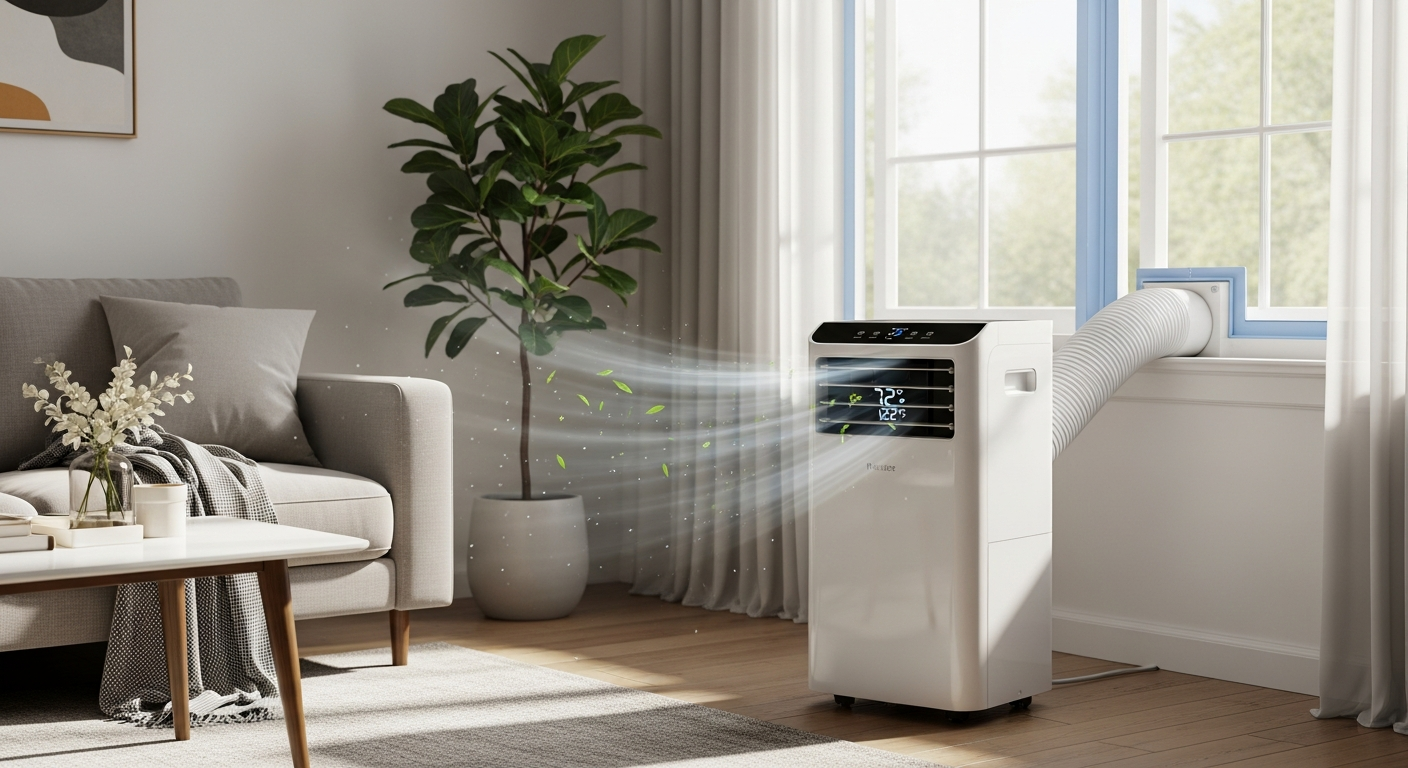
Portable air conditioners have become increasingly popular for those who need flexible, convenient cooling solutions. Whether you live in an apartment, rent your home, or want supplemental cooling in a hot room, these units offer a practical alternative to fixed air conditioning systems. Unlike traditional ACs, portable air conditioners are easy to move, require minimal installation, and can efficiently cool small to medium-sized rooms.
In this article, we will explore the world of portable air conditioners. From top brands like LG, Hisense, Midea, and Black and Decker to specialized units such as hose-free or car portable air conditioners, we will break down everything you need to know before making a purchase. You will also learn how to choose the right size, understand maintenance tips, and discover how these units compare to traditional ACs.
What Are Portable Air Conditioners?
A portable air conditioner is a self-contained cooling unit designed to cool a single room or area without permanent installation. These units contain a compressor, fan, condenser, and control panel in one box, making them highly versatile. The main advantage is mobility. Unlike split ACs or central systems, portable units can be moved between rooms, stored away when not needed, and require no major modifications to your living space.
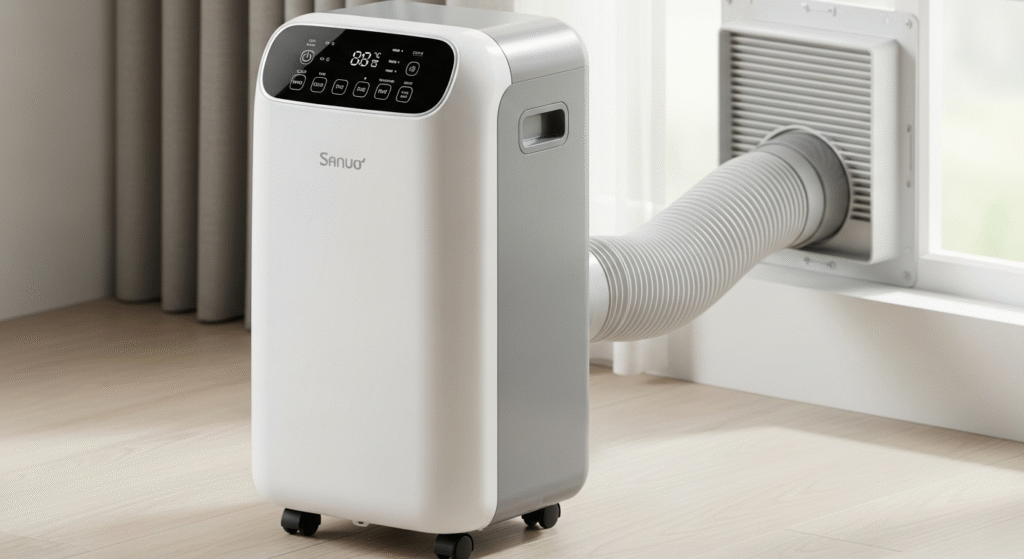
Most portable air conditioners come with an exhaust hose that vents hot air outside through a window or door. Some modern models, like portable air conditioners without hose, use innovative condensation or evaporative cooling methods to eliminate the need for venting. This flexibility makes them ideal for apartments, dorm rooms, or spaces where vent installation is impractical.
How Portable Air Conditioners Work
Portable air conditioners operate by extracting warm air from a room, cooling it through a refrigeration cycle, and then blowing the cooled air back into the space. The heat removed is expelled through an exhaust hose. Units without hoses rely on water evaporation or condensation systems to cool the air, making them slightly less powerful but more convenient in tight spaces.
In addition to cooling, many portable air conditioners include fan modes and dehumidifiers, which help reduce humidity and improve comfort. For instance, in humid climates, using a portable AC can make a room feel cooler even if the temperature setting is moderate.
Benefits of Portable Air Conditioners
Portable air conditioners come with several advantages that make them appealing for homeowners, renters, and travelers.
First, they are affordable compared to fixed systems and involve minimal installation costs. You can simply plug them in and start cooling. Second, the mobility factor allows you to move the unit to different rooms or store it during off-season months. Third, they are ideal for room-specific cooling, saving energy by not cooling unused spaces.
Brands like LG portable air conditioner and Hisense portable air conditioner offer high efficiency and durability, making them popular among users who need reliable cooling solutions. Small portable air conditioners, including Midea portable air conditioner and Black and Decker portable air conditioner, are perfect for bedrooms, offices, or even RVs.
Popular Types of Portable Air Conditioners
- Standard Portable ACs with Hose: These are the most common units, venting hot air through a window. They offer strong cooling for small to medium rooms.
- Portable Air Conditioner Without Hose: These units use water or condensation for cooling, making them convenient for spaces without window access.
- Small Portable Air Conditioners: Compact units designed for personal use or small rooms, ideal for desks, tiny apartments, or cabins.
- Car Portable Air Conditioners: These units plug into your vehicle’s power supply and cool small spaces like cars or trucks.
Each type has unique benefits, and your choice depends on your room size, mobility needs, and whether you prefer hose-free convenience or traditional venting efficiency.
How to Choose the Right Portable Air Conditioner
Selecting the best portable air conditioner depends on several factors. The most critical is room size. Units are rated by BTUs (British Thermal Units), and using a unit with the appropriate BTU for your room ensures efficient cooling. A small bedroom might only need 8,000 BTUs, while a larger living area could require 12,000 BTUs or more.
Other factors include energy efficiency, noise levels, ease of installation, and additional features like timers, remote control, and air purification. Brands like Toshiba portable air conditioner and LG portable air conditioner are known for quieter operation and high efficiency, making them ideal for bedrooms or offices.
Top Brands and Features
LG Portable Air Conditioner units are known for energy efficiency, advanced cooling modes, and quiet operation. Hisense portable air conditioner provides robust performance with user-friendly controls and remote operation. Midea portable air conditioner is popular for compact spaces and affordability. Black and Decker portable air conditioner units offer reliability and easy mobility, while Toshiba portable air conditioner combines durability with advanced features like smart temperature control.
When comparing brands, consider factors such as warranty, energy efficiency, noise levels, and the presence of modern features like programmable timers, sleep mode, and dehumidification.
Installation and Setup
Setting up a portable air conditioner is simple but requires attention to detail. Units with hoses need a proper window venting kit to expel hot air. Hose-free units require placement near a power source and sometimes a water reservoir.
Ensure the unit is on a flat surface to avoid tipping and to allow proper airflow. Keep it away from direct sunlight or heat sources for optimal performance. Most modern units include wheels or handles for easy mobility, so moving them between rooms is straightforward.
Maintenance Tips
Regular maintenance ensures your portable air conditioner operates efficiently. Clean or replace air filters every few weeks to prevent dust buildup. Drain water reservoirs regularly, especially in humid climates. Inspect hoses for leaks or blockages.
Units like Midea portable air conditioner and Black and Decker portable air conditioner often have self-evaporative systems, reducing the need for frequent water drainage. Proper maintenance not only improves efficiency but also prolongs the lifespan of your portable AC.
Energy Efficiency Considerations
Portable air conditioners consume electricity based on their BTU rating and room size. High-efficiency units reduce power consumption and keep electricity bills manageable. Look for units with Energy Efficiency Ratio (EER) ratings or models labeled as energy-saving.
Using portable ACs in combination with fans, closing windows, and reducing heat sources in the room can enhance performance and lower energy use. Brands like LG portable air conditioner and Toshiba portable air conditioner often feature energy-saving modes to optimize performance without increasing costs.
Common Mistakes to Avoid
One common mistake is using a portable AC that is too small for the room, resulting in ineffective cooling. Another is improper venting, which can cause hot air to recirculate. Overlooking maintenance can lead to reduced efficiency and higher energy bills.
Avoid placing the unit near heat sources, blocking air vents, or ignoring manufacturer instructions. Following proper setup and maintenance ensures maximum cooling performance and durability.
FAQs
1. Can portable air conditioners cool large rooms effectively?
Portable ACs are best suited for small to medium rooms. Large spaces may require multiple units or a traditional split AC system.
2. Do all portable air conditioners need a hose?
Not all units require a hose. Hose-free portable air conditioners use condensation or evaporative cooling for convenience in spaces without window access.
3. Are portable air conditioners energy-efficient?
Many modern units, like LG and Toshiba portable air conditioners, are designed with high energy efficiency. Using them wisely can save electricity while providing effective cooling.
4. Can I use a portable air conditioner in my car?
Yes. Specialized portable air conditioners for cars plug into a vehicle’s power supply and can cool small interior spaces effectively.
5. How often should I clean a portable AC?
Filters should be cleaned every 2-3 weeks, and water reservoirs drained regularly. This prevents buildup and ensures efficient operation.
6. Which brand is the most reliable?
Brands like LG, Hisense, Midea, and Toshiba are widely recognized for durability, energy efficiency, and user-friendly features.
Conclusion
Portable air conditioners offer flexibility, convenience, and efficient cooling for small to medium spaces. Whether you’re considering a hose-free model, a compact unit for a bedroom, or a car portable air conditioner, choosing the right type and brand is crucial for comfort and energy savings.
Investing in a reliable brand, following proper installation, and maintaining the unit will ensure optimal performance and longevity. Portable ACs are an excellent solution for renters, small apartments, or those who want temporary or supplemental cooling. With careful selection and usage, you can enjoy cool, comfortable spaces even during the hottest days.